 Goldstone,W., 2009. Unity Game Development Essentials. Packt Publishing.
This book looks very useful as it covers all aspects of Unity in good detail. Chapters of interest include terrain creation in chapter two (and height/light maps), HUD creation and object collection in chapter 5, particle systems in chapter seven... Actually, Yeah; I am definitely going to read through large parts of this book as I believe it provides a good groundwork of some of the main aspects of unity I may not know so much about.
Additionally, while Googling for the picture on the left, I found an Ebook called "Unity 3.x Game Development Essentials" by the same person. From what I've read, it seems to be an updated and expanded version of the book for the newer versions of unity.
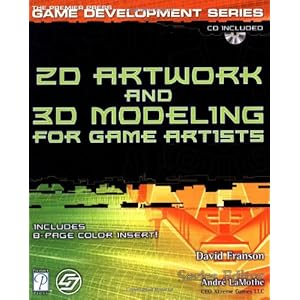
For some reason on my trip to the library I managed to pick up the thickest book they had. Despite it's size, the book is full of step by step tutorials of the pipeline of several areas of creating assets for games. Part three of the book is of great interest to me as it covers making textures for both organic and inorganic models in small steps. unfortunately, despite it's size, the book seems to cover easy things (which I'm likely to already know) in insane detail, and the more complicated things are either small "tips" or about programs or steps I would never use. After sifting through everything I'm sure I can find many interesting things I didn't know before.
 Ahearn, L., 2008. 3D Game Environments. Focal Press.
This book is very interesting; I'm a bit concerned about it's layout (it starts with optimizations to work, with complex vocabulary) and then goes into introductions. Saying that, the optimizations may come in very handy further through my project.Chapter 3 is interesting as it covers shaders and materials in good detail, and chapter 8 and 9 cover natural environments which I may touch on quite a bit in my project. the book doesn't have as much in terms of tutorials, but it focuses more on tips to make what you have look professional.

I borrowed this book from Ross temporarily (he needed it more than me and there was only one copy) this book is very good as it covers making games in unity as a whole; this means it goes from concept, to working around unity, scripting, UI, particles, music and more. I may not need some early chapters in the book, but I have a feeling I will need most of the later ones.

Hi Sean
ReplyDeleteThis is a good start to the blog, the annotated bibliography looks like it is comming along ok. You might also want to start thinking about the timeline now and therefore the component parts of the dissertation you need to focus on first. Make sure you have a chat with chris about this.